How to Make the Mental Game Work for You
A step-by-step guide to getting into the Zone — and staying there.
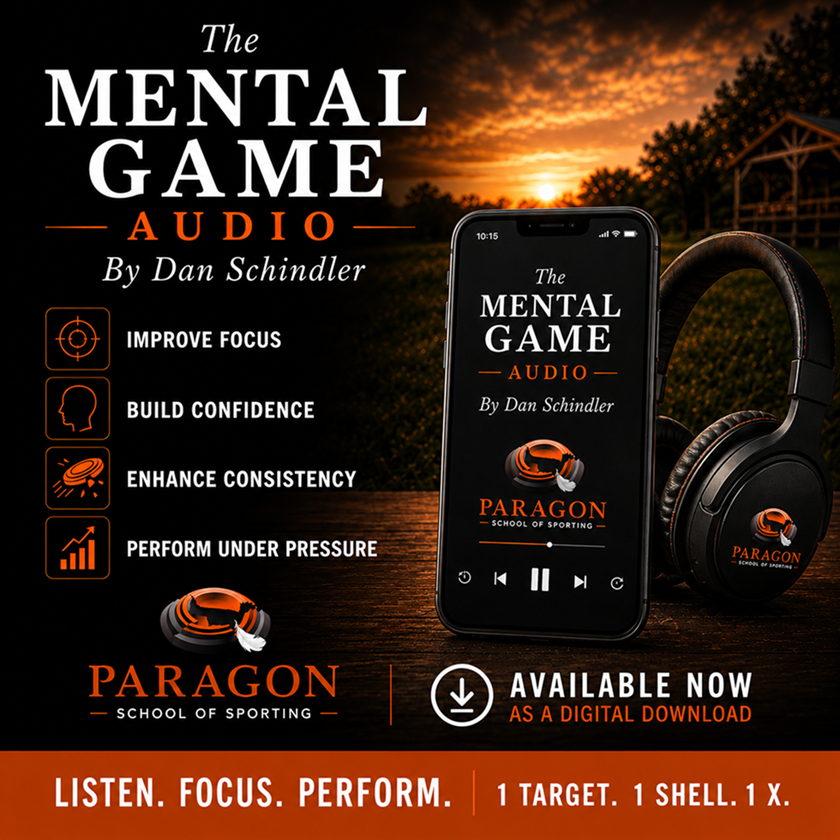
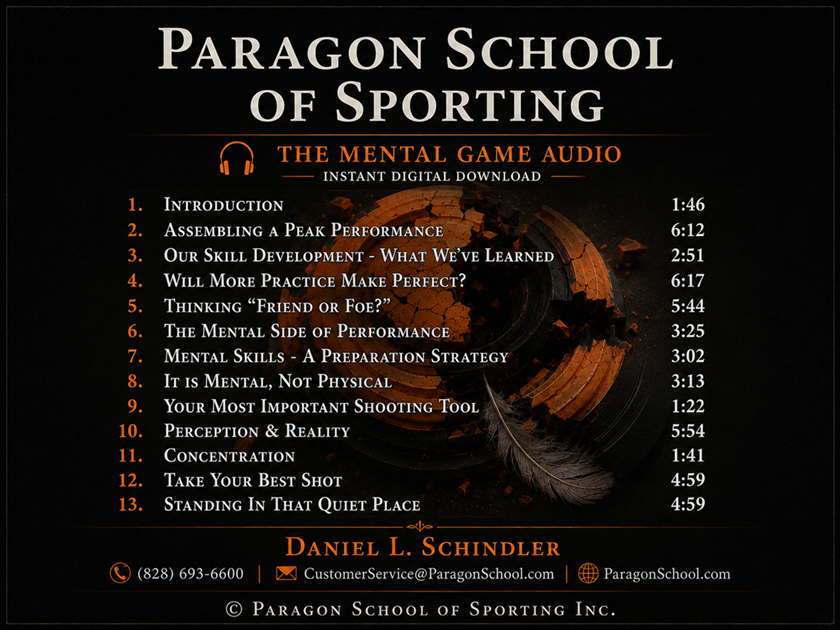
A few years ago, I recorded an audio program on the Mental Game after years spent competing, coaching, and trying to better understand what separates occasional success from dependable performance under pressure.
I’ve been there myself — more times than I’d like to admit.
The audio grew out of watching shooters at every level struggle not with their technique, but with what was happening between their ears.
There’s no shortage of material on this subject. Books, podcasts, clinics, YouTube channels — all tackling the Mental Game with genuine conviction. Every one of them has value. But what I found, both in my own shooting and in working with others, is that the information rarely comes with a clear map. You understand the concepts. You just don’t know exactly how to apply them when the pressure is real and targets are in the air.
That’s what this article is about. Not theory. Not speculation. A step-by-step account of how to make the mental game work for you. I’ve used these principles to earn multiple High Overall wins in registered tournaments — large events and small. I share that not to impress you, but to tell you plainly: this works.
The Truth Is…
There is no shortcut into the Zone. I spent years looking for one — with considerable enthusiasm — and I can tell you with some authority that a shortcut doesn’t exist. But here’s what I also know from experience: the Zone is real. I’ve been in it. Most serious competitors have touched it at least once. It is a genuine, highly productive mental state that is fully accessible to anyone willing to prepare for it.
That word — preparation — is the required foundation under making the Mental Game really work. Anyone, coach or otherwise, who tells you that trust alone will carry you into the Zone omitted the most important part. I’ve heard it said plenty of times: just believe in yourself, just let go, just trust your swing. And I understand the intent. But asking you to trust blindly, without the shooting skills foundation beneath it, will only disappoint.
What I’ve learned — and what I now know to be true — is that the trust you need when the gun comes up can only come from one place: the work you’ve already done to prepare.
Skill Comes First
I Can’t Say This Strongly Enough.
When I was developing my own game, I had to learn this the hard way. I wanted the mental edge before I’d fully earned it. I wanted to trust my swing before my swing was trustworthy. It doesn’t work that way — and the targets were kind enough to make that point repeatedly, without ever once softening the message.
My good friend and instructor Bonnie Kincaid has a phrase she uses with her students seeking improvement: “baby steps.” Every focused step; every shell; every correctly executed swing; every productive practice generates measurable improvement. Why is that important in the Mental Game? Every target that breaks the way you intended builds something inside you that you can’t manufacture any other way. It’s called confidence. By the time you’ve accumulated enough of it, your moves become trustworthy — offering you the kind of trust — in the Zone — that performs superbly under pressure.
Let me say this again. Preparing to use the mental game is not complicated. I want to be clear about that because I’ve watched instructors and shooters make it much harder than it needs to be. The path into the Zone takes work, but it isn’t mysterious.
You practice.
You improve.
You build confidence.
You build trust.
That’s the sequence.
It doesn’t skip steps, and it doesn’t respond well to compromise.
The Moment Everything Changes
There comes a point in training — and I remember this moment clearly from my own experience — when the targets start breaking on purpose. Not by accident. Not by hope.
You call for the target not just believing but knowing that you’re going to break it. Your method is proven. Your long-reinforced swing on this target is dialed in. Your foundation? Secure. That knowledge, that security changes everything about where you are mentally in the shooting box.
That’s when visualization — what sports psychologists call mental imaging — becomes one of the most powerful tools in your arsenal.
Not before.
After.
After you’ve built the foundation.
The distinction matters.
"The most important shooting tool you have is your mind. A well-known case study in sports psychology tested this using basketball free throws. Experienced players were split into two groups. The first group practiced on the gym floor with a ball. The second group practiced in a classroom — no ball, no court — simply visualizing themselves at the line, feeling the shot, and watching the ball fall through the hoop. Test completed, when both groups returned to the gym, the results were consistent: the visualization group outperformed the physical practice group. Every time.”
What strikes me most about that study is the reason it worked: the classroom group never — not once — visualized a miss. Every toss was successful. Perfect, in fact. When they picked up a real ball, they’d already “shot” hundreds of makes. Their thinking had no reference point for doubt or failure. Trust in their movements were total because the preparation was total.
The gym group, meanwhile, had the ball — and all the misses that came with it.
Confidence? Trust?
The Formula
As Simply As I Can State It
Everything I’ve learned — from competing, from coaching, from years of working through this myself — Mental Game training and preparation comes down to three things in sequence:
1. Train to Build Skill
Find what method works; which swing movements work; which sight pictures work. Correctly, do the required reps.
2. Let That Training Build Confidence
Earned confidence. Trustworthy confidence. The kind that comes from X after X evidence.
3. Depend on Total Trust
In your next swing — depend on total, unconditional, unshakeable trust to break the target.
Then, on the day that matters:
Visualize first.
Then trust completely.
XX XX XX XX.
Repeat.
I’ve seen it work for shooters I’ve worked with and for myself. The result — when you’ve done the preparation and you let trust do the work — here comes the best shooting of your life.
Each X is almost magic.
Almost.
XXXX
Every Shooter Wants to Shoot Consistently Higher Scores.
Dan Schindler Will Get You There Faster.
Whether you're a brand-new shooter or you've been shooting for 50+ years, Dan Schindler can help you quickly achieve your shooting goals and shoot consistently higher scores.
Through the simple, proven Paragon Shooting System, you'll learn the all-important Basics and develop the dependable and consistent skills required to shoot consistently higher scores.
You'll learn why targets break and how to make the proper correction so the next target breaks.
Most importantly, you'll learn how to become your own coach so you can continue moving your shooting forward when there's no instructor standing behind you.
In just two 4-hour lessons.
Four Proven Paths to Consistently Higher Scores
Orientation
For brand-new shooters and those who want a refresher.
Skip the frustrating trial and error and quickly build the solid foundation required for dependable and consistent shooting.
Fun. Educational. Confidence-building.
Sporting Clays
Two focused 4-hour sessions designed to help you quickly achieve your shooting goals and shoot consistently higher scores.
Learn the all-important Basics, crossing targets, quartering targets, chandelles, and the Mental Game required for dependable and consistent performance under pressure.
You'll learn why targets break and how to make the proper correction so the next target breaks.
Skeet & Trap
Two focused 4-hour sessions designed to help you develop the dependable and consistent skills required to shoot consistently higher scores.
Learn what works, why it works, and how to repeat it with confidence.
Wingshooting
Flushing Game or Passing Game instruction built around the all-important Basics.
Develop the dependable and consistent skills required to become a more successful wingshooter while moving into the field with greater confidence, competence, and success.
About Dan Schindler
Trusted by Shooters Worldwide for More Than Three Decades
Dan Schindler is one of only a select few instructors worldwide invited into the prestigious Guild of Shooting Instructors (UK) and has held NSCA Level III Instructor status since 1995.
For more than three decades, Dan has helped shooters of all skill levels—from beginners to Master Class competitors—quickly achieve their shooting goals through the simple, proven Paragon Shooting System.
Shooters travel from across the United States and around the world to train with Dan because his methods work—and continue working long after the lesson ends.
At the core of Paragon is a clear, step-by-step system that teaches shooters how to see targets correctly, understand their misses, make the proper corrections, and continue improving independently.
Dan's goal is simple:
Help shooters eliminate confusion, develop dependable and consistent shooting skills, and shoot consistently higher scores in the shortest amount of time possible.
Dan Schindler's Books
Many shooters first discover the Paragon Shooting System through Dan Schindler's books. They learn the principles at home and then come to Paragon to confirm and accelerate the system through hands-on instruction.
Written in plain, uncomplicated language, Dan's books remove the mystery from good shooting and provide a solid foundation for long-term success.
Take Your Best Shot (Book I)
The gold-standard primer used by shooters, coaches, and shooting teams around the world.
A simple, practical guide to the fundamentals required for dependable and consistent shooting.
To The Target (Book II)
Builds on Book I and focuses on Gun Management and developing a dependable, trustworthy swing.
Widely recognized as one of the most innovative books ever written on clay target shooting.
Beyond The Target (Book III)
The next best thing to booking a lesson with Dan Schindler.
A powerful collection of insights, stories, and practical solutions designed to help shooters break more targets, build confidence, and continue moving forward.
Inside, you'll discover how to:
✔ Solve inconsistency at its source
✔ Build the essential skills required for dependable performance
✔ Eliminate random gun movement
✔ Stay focused under pressure
✔ Develop a repeatable pre-shot routine
✔ Continue improving long after the lesson ends
Experience Your Very Best Shooting.
1 Target. 1 Shell. 1 X.
Trusted by Shooters Worldwide for More Than Three Decades.